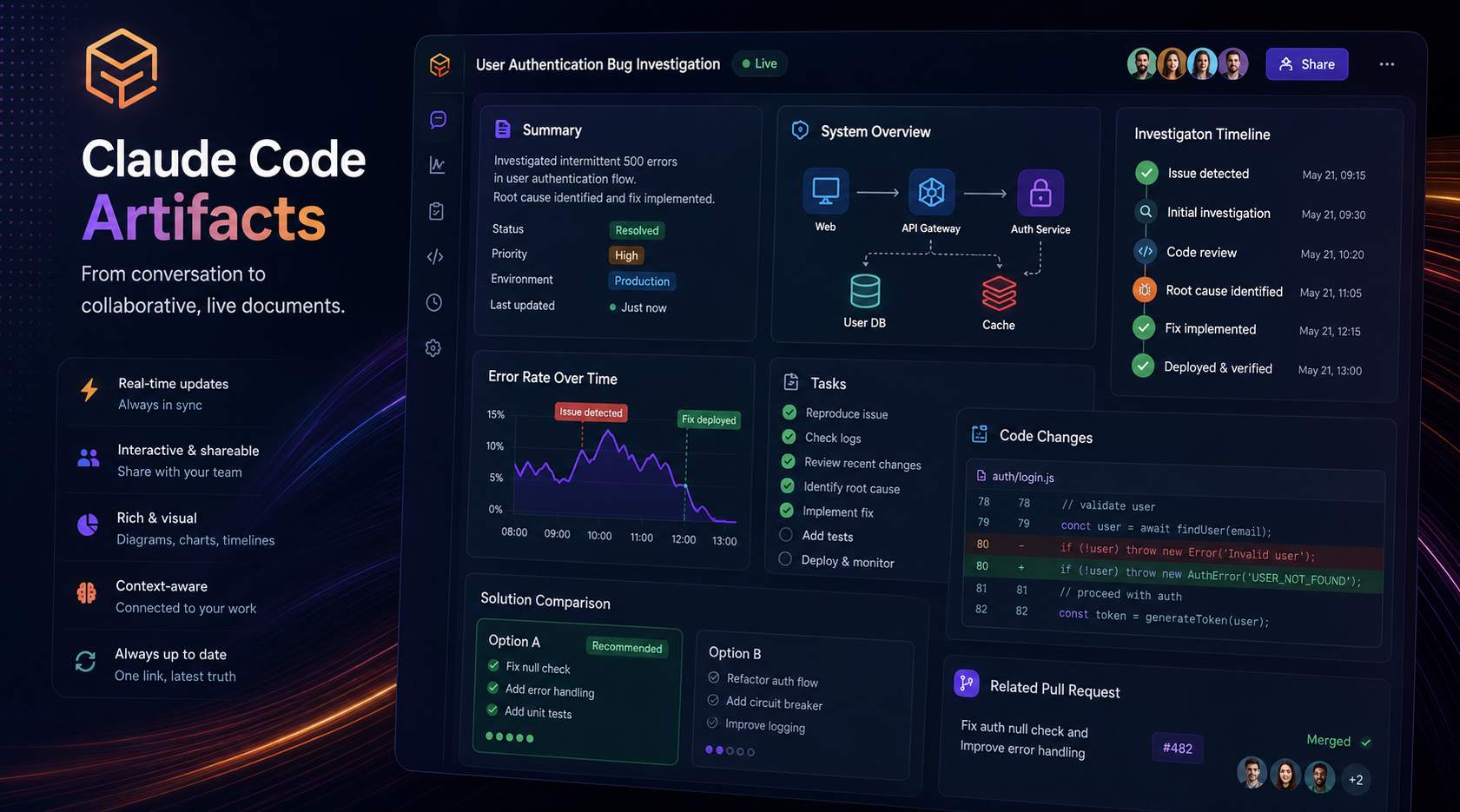
كلود كود يدعم الآن المخرجات الهيكلية (artifacts)
أعلنت Anthropic Claude أن كود كلود يدعم الآن 'المخرجات الهيكلية' (artifacts)، مما يمكن الذكاء الاصطناعي من إنشاء وتفاعل مع مخرجات منظمة مثل الأكواد والملفات ومكونات واجهة المستخدم مباشرة ضمن واجهة المحادثة.
في NUSRV، نعمل باستمرار على تعزيز خدماتنا المدارة للذكاء الاصطناعي لتزويد عملائنا من الشركات بأكثر الحلول تقدمًا وعملية. أحد التطورات الرئيسية التي قمنا بدمجها في عروضنا هو القدرة على إدارة والاستفادة من 'المخرجات الهيكلية' (artifacts) التي يولدها الذكاء الاصطناعي – وهي مخرجات منظمة تتجاوز الردود النصية البسيطة. تتيح لنا هذه الإمكانية تقديم نتائج أكثر واقعية وقابلة للتنفيذ مباشرة من نماذج الذكاء الاصطناعي لدينا، مما يبسط سير العمل ويسرع تسليم المشاريع.
ما الذي تمكنه هذه القدرة
تتيح هذه القدرة المتقدمة لنماذج الذكاء الاصطناعي لدينا إنتاج مجموعة متنوعة من المخرجات المنظمة، أو 'المخرجات الهيكلية'، والتفاعل معها مباشرة ضمن التدفق التخاطبي أو التشغيلي. فبدلاً من مجرد وصف الحل، يمكن للذكاء الاصطناعي الآن إنشاء الحل نفسه – سواء كان ذلك مقتطفات برمجية، أو ملفات تكوين، أو تصورات بيانات، أو حتى مكونات واجهة المستخدم. وهذا يعني أن عملائنا يمكنهم الحصول على أصول جاهزة للاستخدام تندمج بسلاسة في أنظمتهم وعملياتهم الحالية. على سبيل المثال، يمكن للذكاء الاصطناعي المكلف بتحسين استعلام قاعدة بيانات أن ينتج الآن نص SQL المكرر، أو يمكن للذكاء الاصطناعي الذي يساعد في تطوير الواجهة الأمامية أن يولد ملفات HTML و CSS الضرورية. وهذا يتجاوز النصائح النظرية إلى أصول عملية قابلة للنشر، مما يقلل بشكل كبير من الجهد اليدوي المطلوب لترجمة رؤى الذكاء الاصطناعي إلى نتائج ملموسة.
كيف تنفذ NUSRV هذه القدرة للعملاء
نحن ننفذ قدرة إنشاء وإدارة المخرجات الهيكلية هذه كمكون أساسي في حلول الذكاء الاصطناعي المخصصة لدينا. بالنسبة لعميل في الخدمات المالية، قد نقوم بتكوين ذكاء اصطناعي لإنشاء تقارير الامتثال بتنسيق XML محدد، مع جميع حقول البيانات والتحققات الضرورية. بالنسبة لعميل في قطاع التصنيع، يمكن للذكاء الاصطناعي إنتاج ملفات CAD لتصاميم النماذج الأولية بناءً على معايير محددة، أو إنشاء نصوص Python لأتمتة فحوصات مراقبة الجودة. تتضمن عمليتنا فهمًا عميقًا للاحتياجات التشغيلية للعميل وبيئته التقنية. ثم نقوم بتصميم وضبط نماذج الذكاء الاصطناعي ليس فقط لفهم المطالبات المعقدة ولكن أيضًا لإنتاج مخرجات بالتنسيق والهيكل المطلوبين بالضبط. ويشمل ذلك إعداد طبقات تحقق قوية لضمان أن المخرجات الهيكلية التي تم إنشاؤها تلبي معايير الجودة وتتكامل بسلاسة في دورات حياة تطوير البرمجيات الحالية للعميل أو خطوط الأنابيب التشغيلية. نحن ندير دورة الحياة بأكملها، من تدريب النماذج ونشرها إلى المراقبة والتحسين المستمرين، مما يضمن أن المخرجات الهيكلية دقيقة ومفيدة باستمرار.
النتائج التجارية
النتيجة التجارية الأساسية لعملائنا هي تسريع كبير في دورات تطويرهم وكفاءاتهم التشغيلية. من خلال تلقي مخرجات هيكلية قابلة للنشر مباشرة من خدمات الذكاء الاصطناعي لدينا، يمكن للمؤسسات تقليل الوقت والموارد المستهلكة في الترجمة اليدوية والترميز وتنسيق البيانات بشكل كبير. وهذا يؤدي إلى تسريع وقت طرح المنتجات والميزات الجديدة في السوق، وتحسين الدقة في المهام القائمة على البيانات، وتقليل كبير في الأخطاء البشرية. على سبيل المثال، يمكن لعميل في قطاع التجارة الإلكترونية استخدام خدمتنا لإنشاء أصول حملات تسويقية مخصصة بسرعة، بما في ذلك نصوص الإعلانات ومواصفات الصور، المصممة خصيصًا لقطاعات العملاء الفردية. تترجم قدرة الإخراج المباشر هذه إلى وفورات ملموسة في التكاليف، وتعزيز الإنتاجية، وميزة تنافسية، مما يسمح للشركات بالابتكار بشكل أسرع والاستجابة لمتطلبات السوق بمرونة أكبر. تضمن خدمتنا المدارة أن العملاء يستفيدون من الإمكانات الكاملة للذكاء الاصطناعي لتقديم قيمة تجارية ملموسة وقابلة للقياس.
Ready to Apply This to Your Business?
Book a 30-minute strategy call. We'll take the thinking in this article and apply it directly to your workflows and business context.